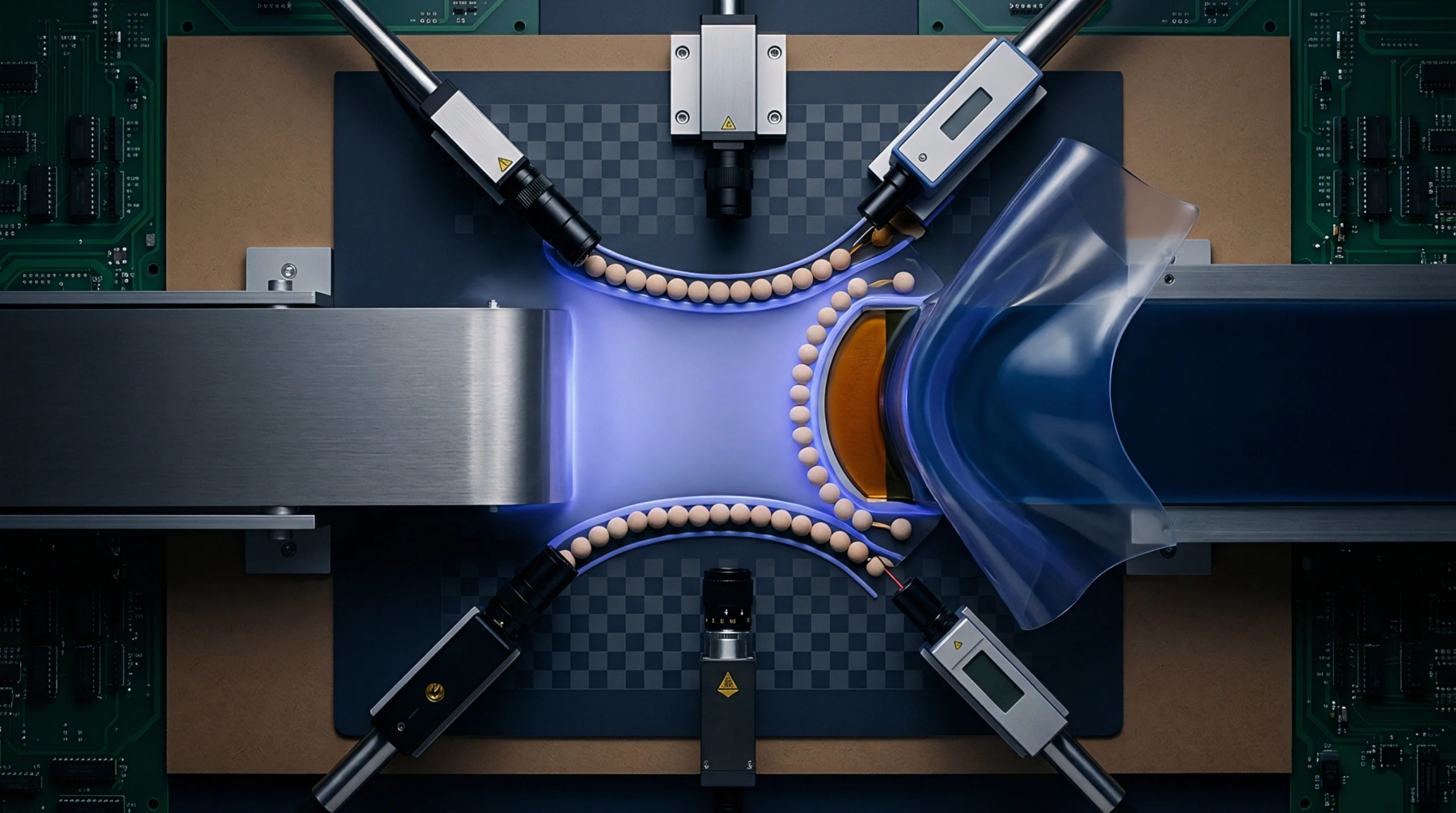
Digital ASIC Polynomial Compensation for Differential Thermal Drift in Pressure Modules
Digital ASIC polynomial compensation corrects pressure module thermal drift by evaluating bivariate surface fit matrices stored in EEPROM over fixed-point ALUs.
Digital ASIC polynomial compensation corrects pressure module thermal drift by evaluating bivariate surface fit matrices stored in EEPROM over fixed-point ALUs.

Cross-quad common-centroid bandgap layouts cancel linear thermal gradients, while PCB isolation slots prevent package piezoresistive strain from shifting Vbe drift.
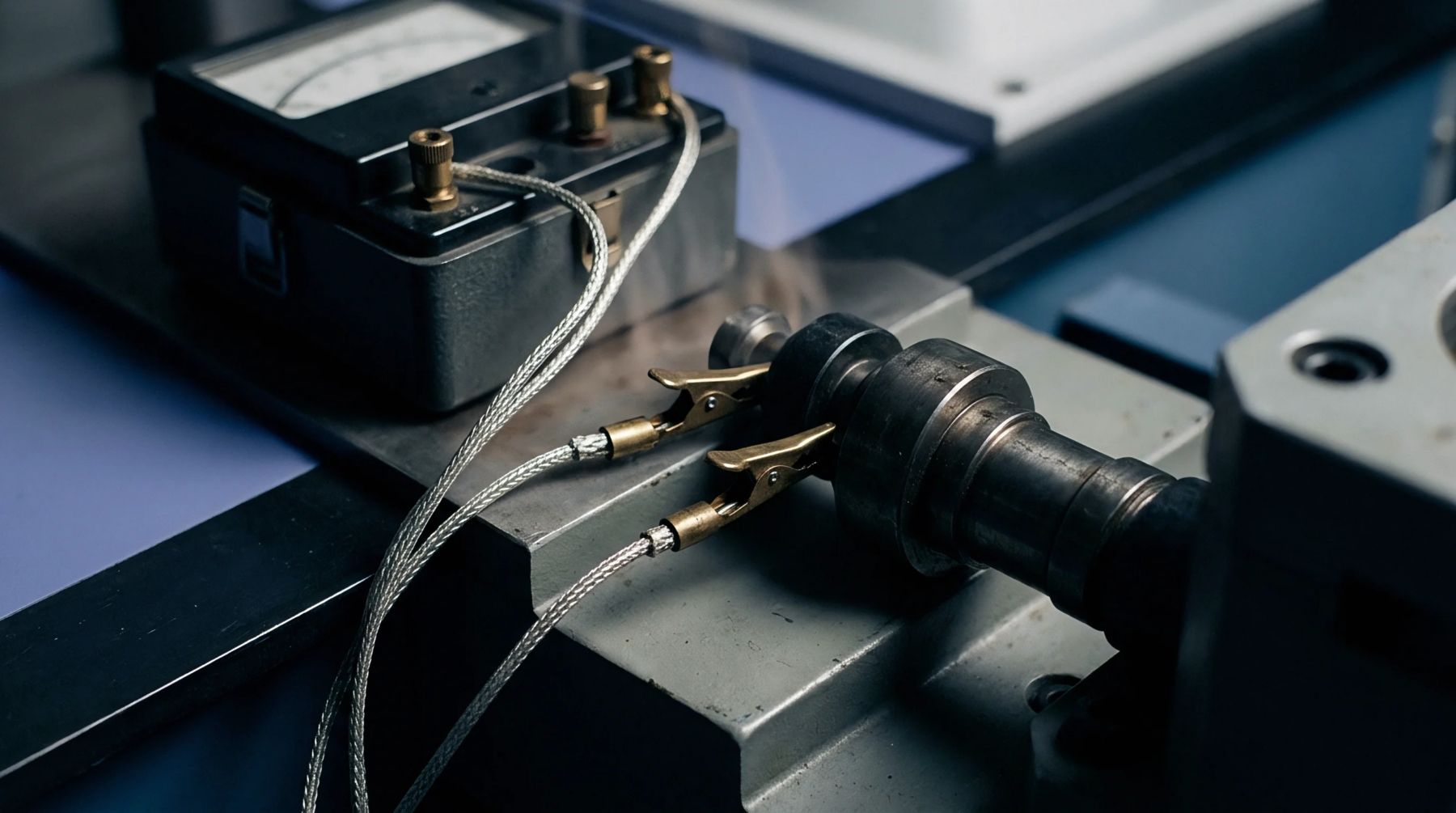
Bivariate polynomial matrix fitting corrects non-linear sensor thermal drift when inputs are normalized and solved via singular value decomposition.

Precision Allan variance characterization demands thermal soak chambers featuring sub-millikelvin temperature stability, low vibration, and zero fluid turbulence.

Thermal drift compensation uses bivariate polynomial surfaces or lookup tables in embedded firmware to eliminate temperature-induced bridge offset and span errors.
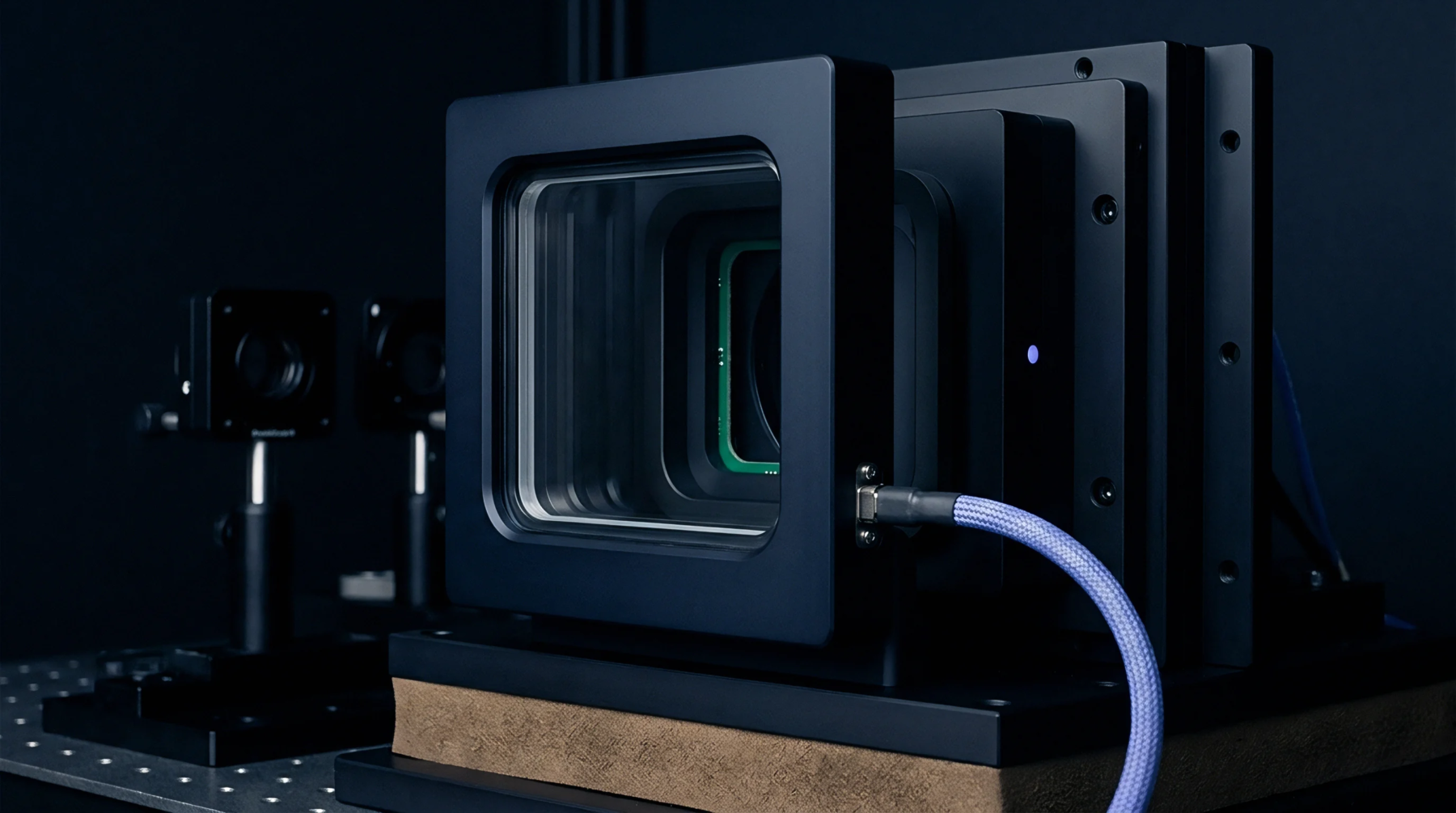
High frequency inductive displacement sensors require target thickness exceeding three skin depths and differential coil layouts to isolate sub-micron target shifts from thermal resistance drift.
Expertise is a utility, not a secret. sentiention™ publishes its working knowledge as open reference: intelligence layer covering the materials it sources, the markets it enters, and the reference that serves both.