Finite Element Modeling of Polymeric Underfill Creep for Silicon Sensors
Finite element modeling of underfill creep uses Prony viscoelasticity and Anand viscoplasticity to predict and compensate long-term silicon sensor drift.
Finite element modeling of underfill creep uses Prony viscoelasticity and Anand viscoplasticity to predict and compensate long-term silicon sensor drift.
Augmenting transient observer state vectors with nonlinear Maxwell viscoelastic die attach models eliminates sensor drift between 77 Kelvin and 473 Kelvin.

Polymeric underfill modulus collapse near glass transition increases board strain attenuation while driving out-of-plane bump fatigue and sensor drift.
Viscoelastic relaxation in ultrafine cladding coatings couples dynamic shear strains directly into the core, generating uncorrected optical phase drift.
Viscoelastic stress relaxation in packaging adhesives redistributes mounting strains over time, driving zero drift that requires thermal pre-aging to stabilize.
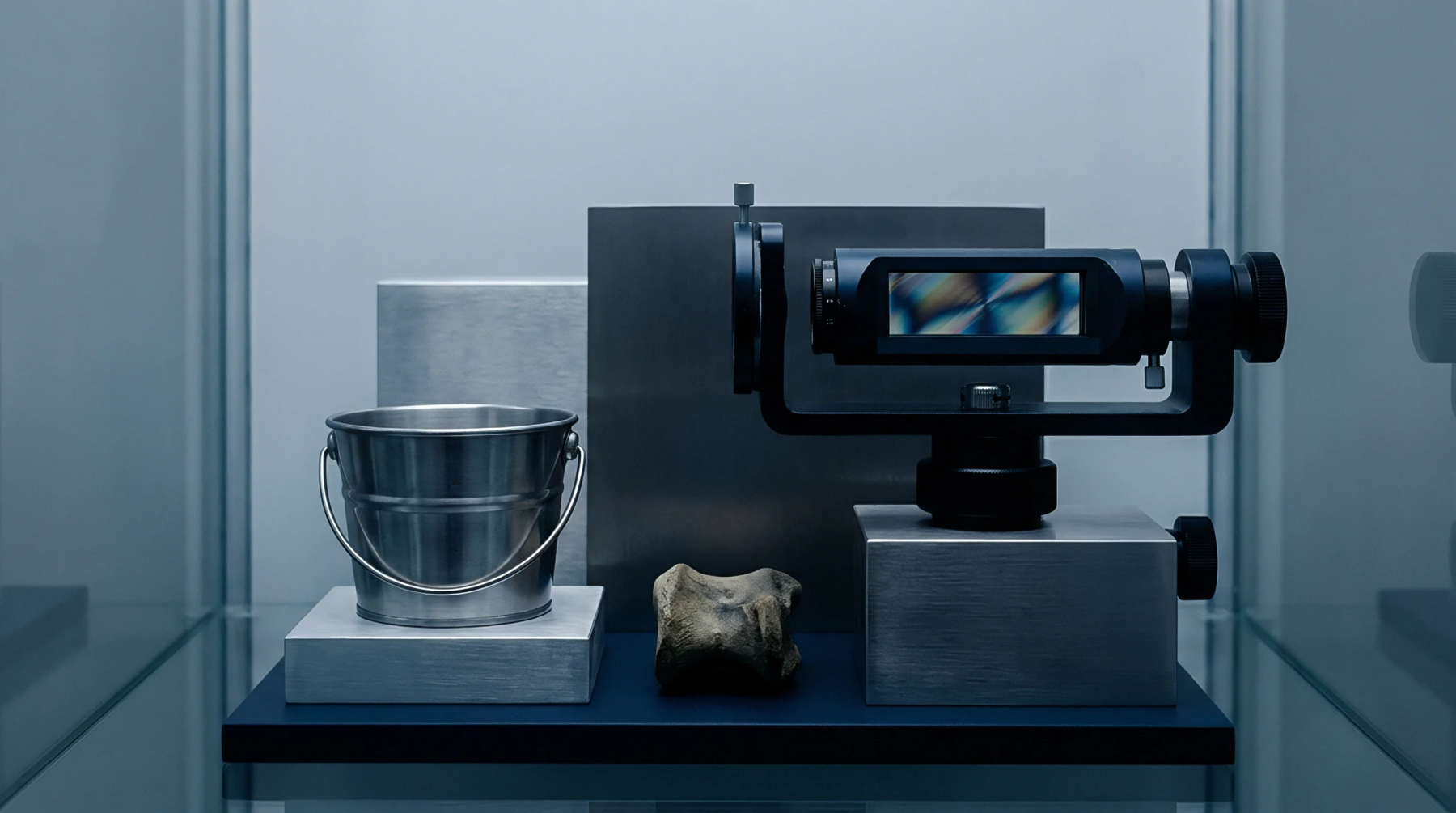
Viscoelastic relaxation in organic sensor die attach adhesives causes baseline zero drift that requires thermal pre-conditioning bake cycles to stabilize.
Expertise is a utility, not a secret. sentiention™ publishes its working knowledge as open reference: intelligence layer covering the materials it sources, the markets it enters, and the reference that serves both.