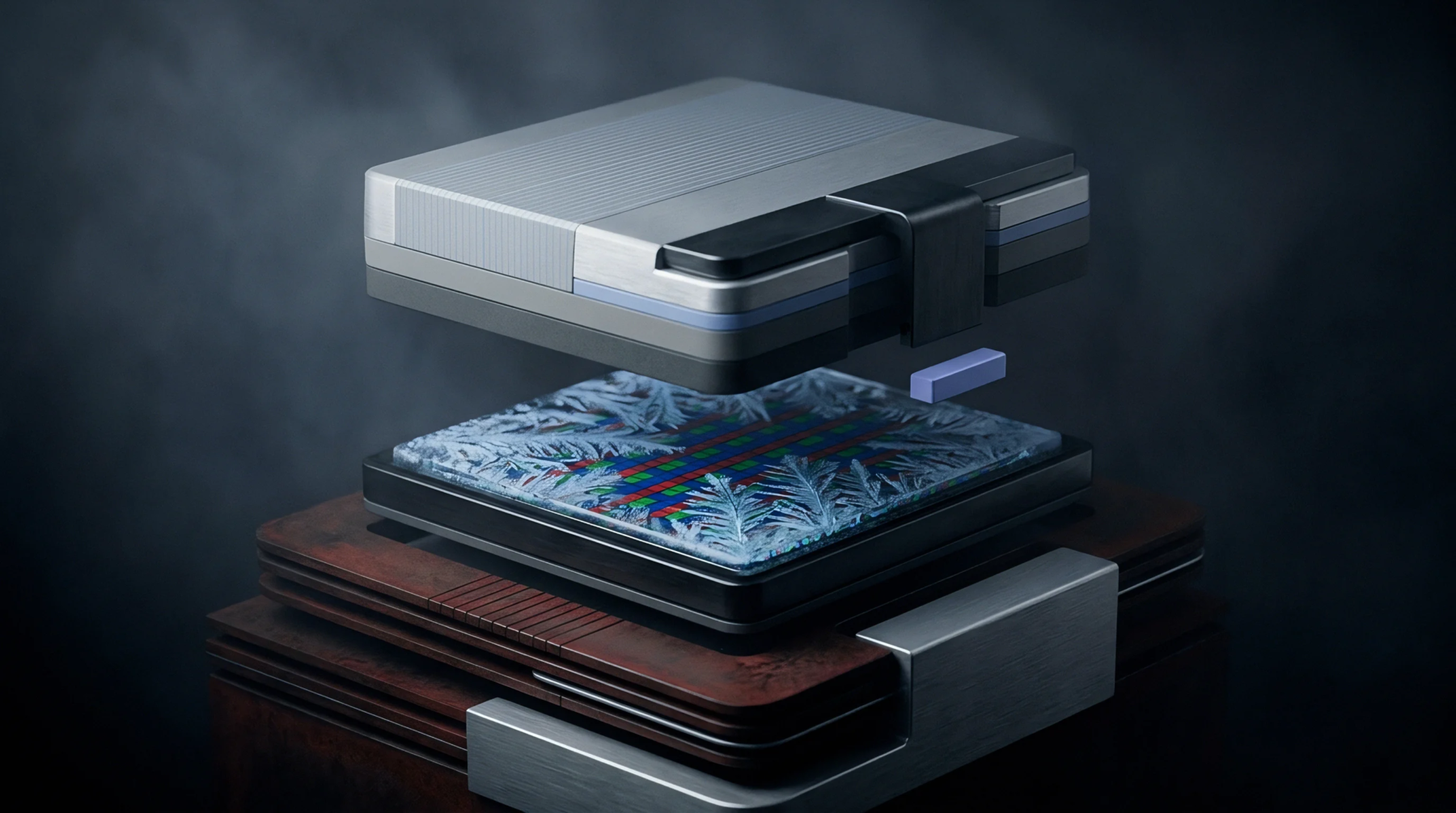
Micro-Strain Decay Rates in High-Temperature Epoxies under Thermal Soak
High-temperature epoxy bondlines lose shear stiffness during thermal soak, causing continuous micro-strain span decay and zero drift that require time-based derating.
High-temperature epoxy bondlines lose shear stiffness during thermal soak, causing continuous micro-strain span decay and zero drift that require time-based derating.
Finite element modeling of underfill creep uses Prony viscoelasticity and Anand viscoplasticity to predict and compensate long-term silicon sensor drift.
Extrapolating single isotherm Prony parameters beyond experimental test windows introduces exponential error growth governed by unconstrained relaxation modes.

Higher crosslink density suppresses polymer die attach creep rates by restricting free volume and extending rubbery plateau modulus under continuous thermal load.
Viscoelastic relaxation in polymer die attach causes time-dependent strain transfer to MEMS proof masses, driving long-term zero-g offset drift.
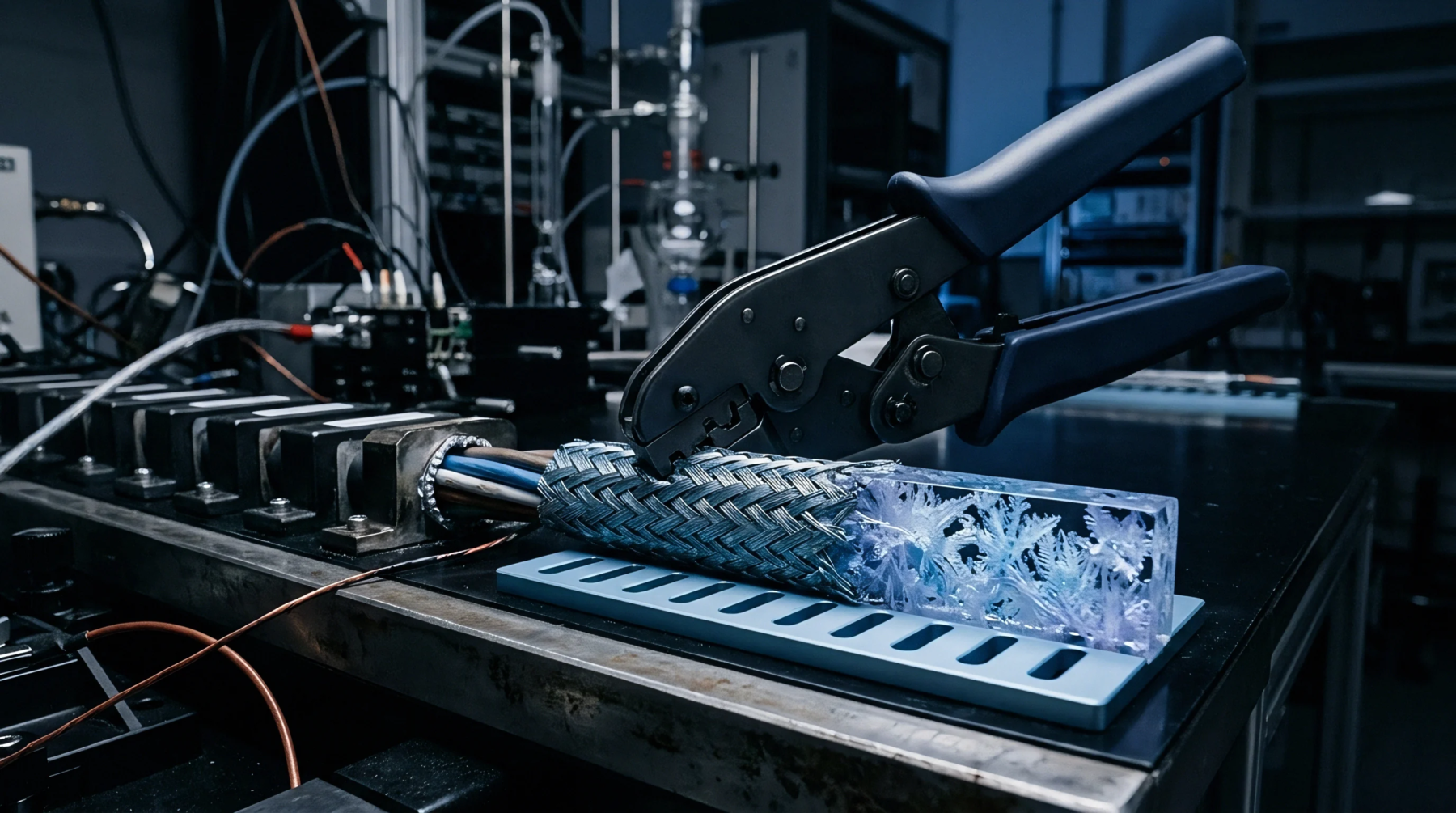
Constitutive modeling of viscoelastic aging in thermoset die attach layers enables precise finite element prediction of lifetime stress and sensor drift.

Viscoelastic stress relaxation in sensor potting creates non-linear strain hysteresis, requiring generalized Maxwell modeling to prevent zero-point calibration drift.
Expertise is a utility, not a secret. sentiention™ publishes its working knowledge as open reference: intelligence layer covering the materials it sources, the markets it enters, and the reference that serves both.